
Screws vs. Nails: Why Our Fences Never Use Nail Guns
Our fences exclusively use exterior ceramic-coated star-drive screws instead of pneumatic nails because Colorado's arid climate (dropping below 15% humidity) shrinks wood and loosens smooth nails under wind suction. Ceramic screws provide over 300% greater withdrawal strength, prevent rust bleed, and allow individual board replacement without splitting rails.
Field Insight on the Nail Gun Volume Trap
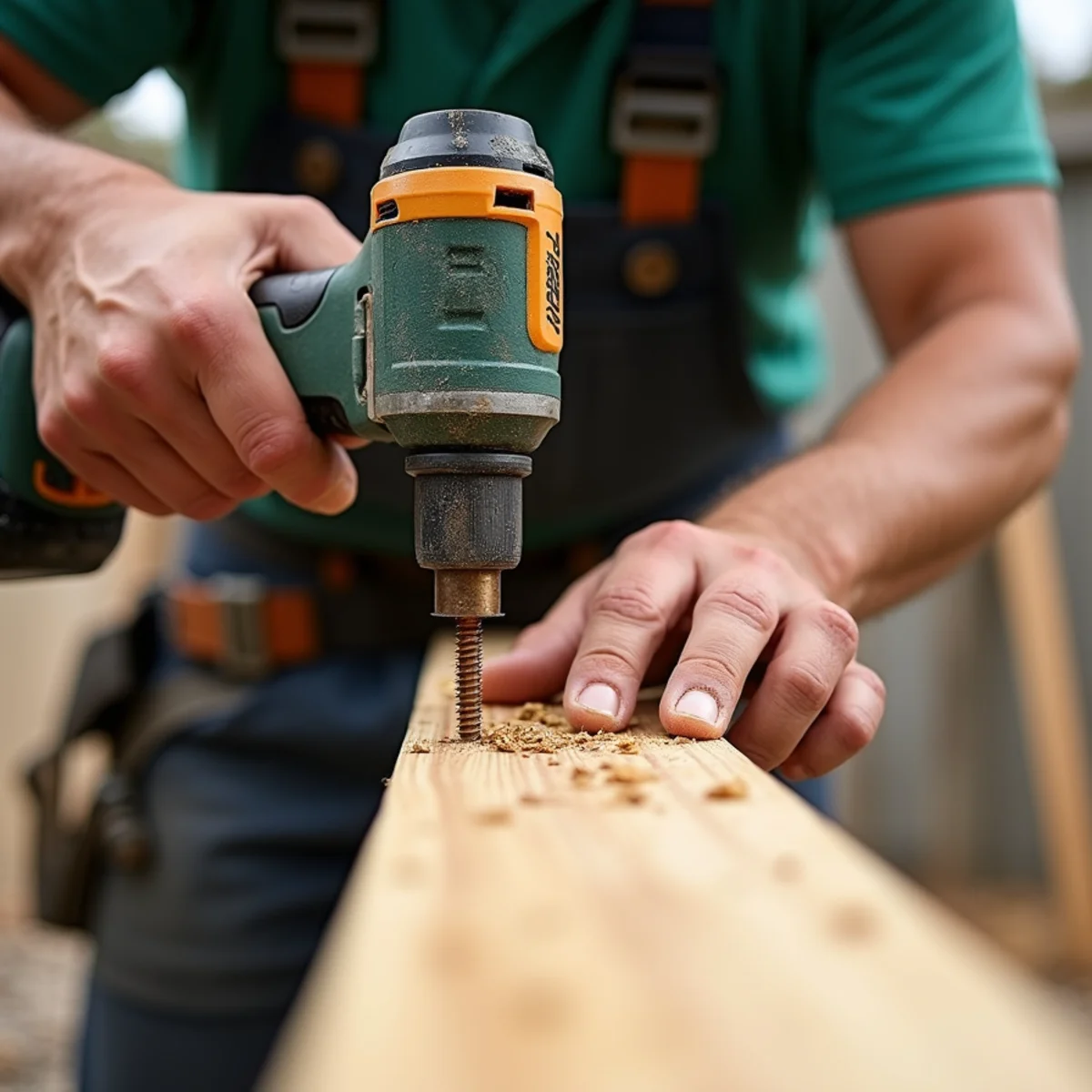
Pneumatic nail guns exist for one reason: contractor speed and profit. A builder can fire 100 nails in two minutes with a nail gun, allowing a two-man crew to slap together 200 feet of cheap fence in a single day. Driving individual structural screws takes four times longer, but creates a joint with 450 lbs of withdrawal resistance that will never back out under Chinook wind suction.
Guide Outline: Screws vs. Nails: Why Our Fences Never Use Nail Guns
- 1.The Mechanics of Wood Movement in Colorado's 15% Arid Humidity
- 2.Withdrawal Resistance: Smooth Framing Nails vs. Deep-Threaded Screws
- 3.The Pneumatic Nail Gun Trap: Speed and Volume vs. Structural Longevity
- 4.Corrosion Chemistry: Galvanized Coating Failures vs. Ceramic Finishes
- 5.Serviceability and Repairability: Replacing Damaged Boards Without Splitting Rails
- 6.Frequently Asked Questions
The Mechanics of Wood Movement in Colorado's 15% Arid Humidity
Building outdoors along the Colorado Front Range requires understanding wood hygroscopy. Wood is an organic material that constantly seeks moisture equilibrium with the surrounding air, expanding across its grain during humid wet periods and shrinking during dry spells.
In Colorado Springs, atmospheric relative humidity frequently drops into single digits (8% to 15%) during dry summer heatwaves and winter Chinook wind events. Standard fence pickets and framing rails shipped from lumber mills contain 18% to 22% internal moisture.
As the lumber dries rapidly in our mountain air, boards shrink by up to 1/8 inch in width and thickness. This severe radial and tangential shrinkage compresses wood fibers around smooth nail shanks, breaking the friction bond that keeps the nail anchored in place.
Questions Regarding screws vs nails fence construction?
Call Jeremy directly for veteran-owned technical guidance on Front Range fencing.
| Climate Humidity Level | Wood Moisture Equilibrium | Picket Dimensional Movement | Impact on Smooth Nail Friction |
|---|---|---|---|
| Humid Coastal (70%–80%) | 14% to 16% Internal | Minimal annual expansion | Nails retain moderate friction grip |
| Midwest Average (50%–60%) | 10% to 12% Internal | Moderate seasonal movement | Nails hold for 5 to 7 years |
| Colorado Springs High Arid (8%–20%) | 4% to 6% Internal | Severe radial shrinkage & cupping | Friction bond fails; nails back out |
| High Mountain Foothills (10%–25%) | 5% to 7% Internal | Rapid freeze-thaw grain checking | Smooth nails pop loose in 12–18 months |
Withdrawal Resistance: Smooth Framing Nails vs. Deep-Threaded Screws
In structural timber engineering, fastener capacity is measured by two metrics: shear strength (resistance to snapping sideways) and withdrawal resistance (resistance to being pulled straight out of the wood under tension).
When high Chinook winds blow against a solid privacy fence, they create massive low-pressure aerodynamic suction on the leeward side of the pickets. Smooth nails rely strictly on surface friction. A smooth 2-inch pneumatic wire nail has a withdrawal capacity of only 60 to 85 pounds in soft cedar.
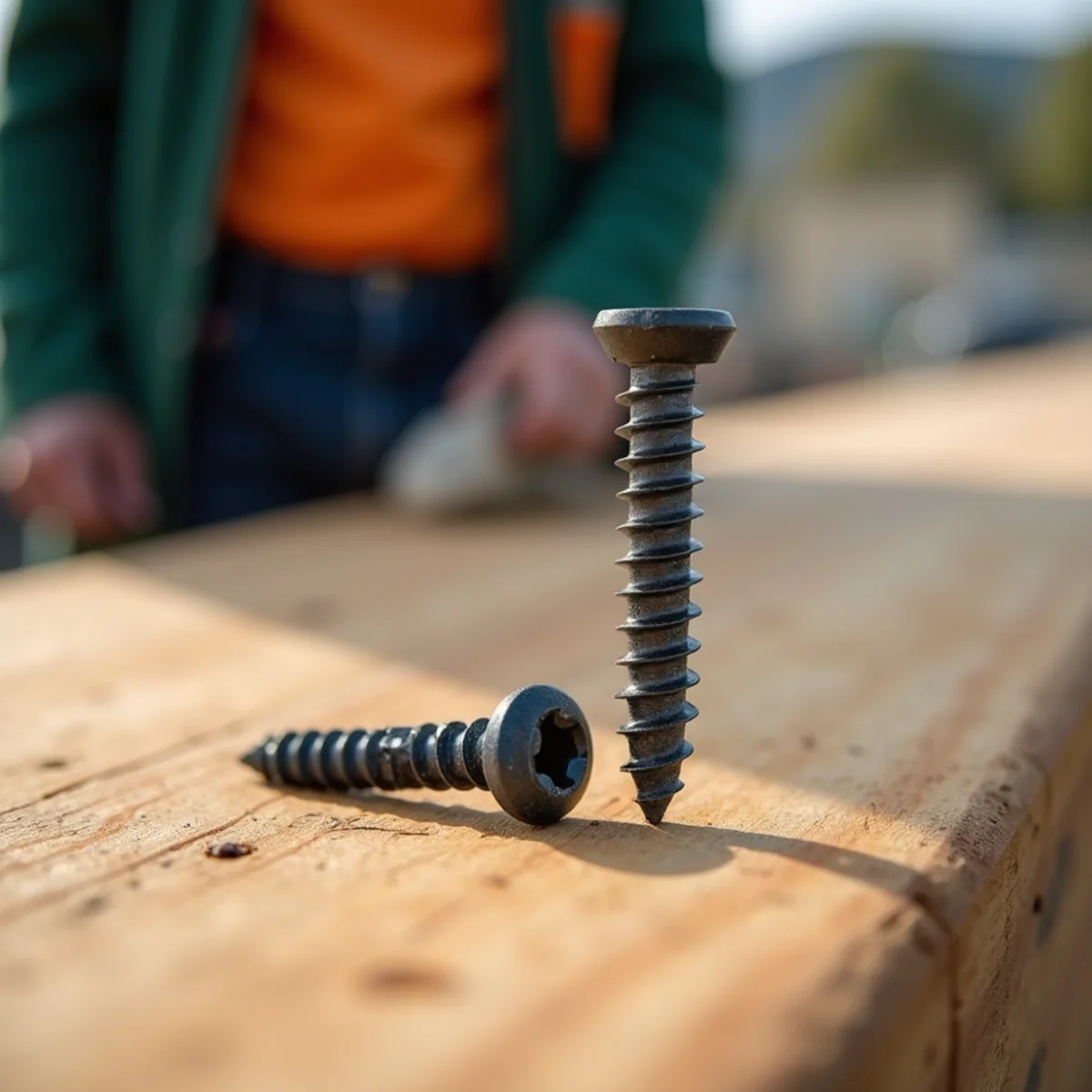
By comparison, an exterior structural wood screw features deep, aggressive spiral threads that mechanically bite into the wood grain. A 2.5-inch ceramic-coated screw provides over 350 to 500 pounds of withdrawal resistance—more than quadruple the holding capacity of a nail.
| Fastener Specification | Holding Mechanism | Withdrawal Resistance (Cedar) | Behavior Under 80-mph Wind |
|---|---|---|---|
| Pneumatic Wire Nail (Smooth) | Surface friction only | 60 – 85 lbs pullout force | Pops out under aerodynamic suction |
| Ring-Shank Framing Nail | Deformed shank ridges | 120 – 160 lbs pullout force | Holds moderate wind; rusts over time |
| Electro-Galvanized Screw | Cut threads in wood | 280 – 350 lbs pullout force | Zinc coating flakes off; rust stains |
| Ceramic Star-Drive Screw | Aggressive deep threads | 420 – 550 lbs pullout force | Zero pullout; lifetime warranty |
The Pneumatic Nail Gun Trap: Speed and Volume vs. Structural Longevity
Why do so many Colorado Springs fencing companies still use nail guns if screws are vastly superior? The answer comes down to contractor economics.
Pneumatic coil nailers allow a crew to fire 3 to 4 fasteners per second without pre-drilling or bit changes. A contractor building a 160-foot fence saves approximately 6 to 8 hours of labor by shooting nails rather than driving screws. For high-volume production builders throwing up hundreds of tract homes in Falcon or Fountain, speed trumps quality every time.
At Jeremy's Fences, we operate under our Veteran Standard: quality over volume. Our carpenters drive every fastener using high-torque impact drivers fitted with magnetic star-drive (Torx) bits, countersinking each screw head just below the wood surface without crushing delicate cedar cells.
Action Checklist:
- Ask every fencing bidder whether they use pneumatic nail guns or structural screws
- Verify framing rails are fastened to posts with heavy 3-inch or 3.5-inch screws
- Ensure pickets are fastened with two screws per rail (six screws per 6-foot picket)
- Inspect fastener heads: star-drive (Torx) heads prevent bit cam-out and stripping
Corrosion Chemistry: Galvanized Coating Failures vs. Ceramic Finishes
Have you ever seen an older cedar fence marred by ugly black drip streaks running downward from every nail head? That unsightly discoloration is caused by chemical galvanic corrosion.
Western Red Cedar contains natural tannic acids. When moisture enters the wood, tannic acid reacts with cheap steel nails, dissolving iron and creating black iron tannate stains. Standard electro-galvanized nails feature a microscopic zinc coating (less than 0.2 mils thick) that is easily scratched off during pneumatic firing.
Jeremy's Fences uses multi-layer ceramic-coated exterior fasteners. Ceramic coatings are chemically inert: they do not react with cedar tannins, provide 1,500+ hours of salt-spray corrosion resistance, and will never bleed black streaks across your beautiful fence.
| Fastener Coating Technology | Corrosion Resistance Rating | Reaction with Cedar Tannins | Aesthetic Impact on Wood |
|---|---|---|---|
| Bright Steel (Uncoated) | Zero resistance (rusts in 30 days) | Immediate severe black bleed | Destroys wood appearance instantly |
| Electro-Galvanized (EG) | Poor (< 200 hours salt spray) | Tannic acid dissolves zinc quickly | Black drip streaks within 1–2 years |
| Hot-Dipped Galvanized (HDG) | Moderate (500–800 hours) | Thick zinc resists moderate acid | Rough gray heads; can scuff cedar |
| Multi-Layer Ceramic Coating | Superior (1,500+ hours salt spray) | Chemically inert; zero reaction | Clean, rust-free finish guaranteed |
Serviceability and Repairability: Replacing Damaged Boards Without Splitting Rails
A final, immense advantage of screw construction is future serviceability. Life happens: a falling branch breaks a picket, a neighbor's dog scratches through a board, or an irrigation pipe repair requires temporary panel removal.
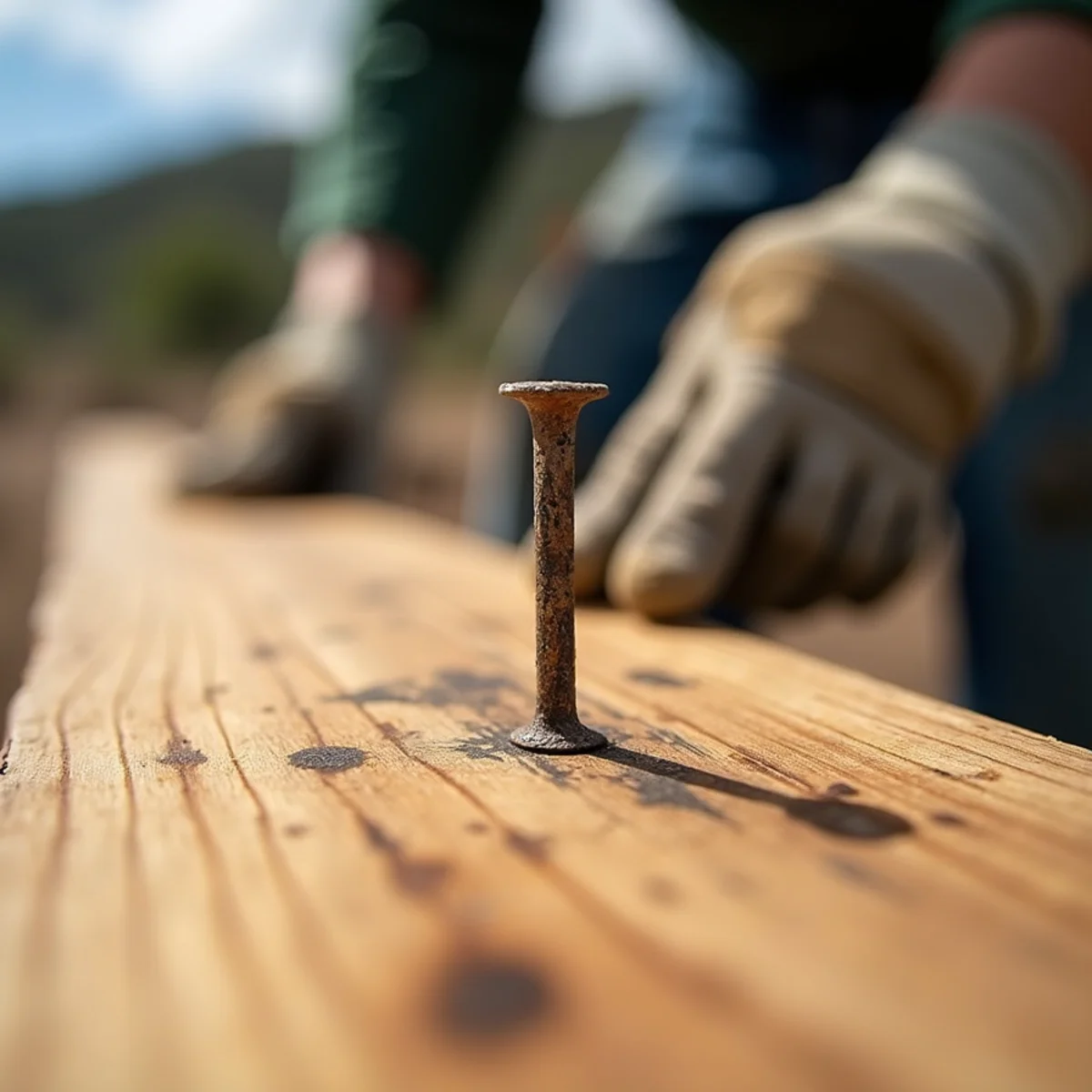
If your fence was assembled with pneumatic ring-shank nails, removing a damaged board is a destructive nightmare. Prying against the nail head splits the fragile cedar picket, gouges horizontal 2x4 rails, and leaves jagged metal shanks sticking out of the timber.
With our screw-assembled fences, repair is effortless: simply back the ceramic screws out with a cordless driver in 15 seconds, remove the damaged picket, slide a fresh board into place, and re-drive the screws into the existing holes. The surrounding framing remains 100% undamaged.
Call Jeremy directly at (614) 543-4232 to experience the Veteran Standard of fence construction.
Action Checklist:
- Back screws out easily with a cordless impact driver without damaging rails
- Swap individual broken pickets in minutes following storm damage
- Remove entire fence panels cleanly when landscape contractors need bobcat access
- Re-tighten structural connections over time as natural wood settling occurs
Frequently Asked Questions
Colorado's arid air (humidity dropping below 15%) causes wood pickets to shrink rapidly, breaking the friction grip of smooth nails. High Front Range winds then create suction that pulls loose nails out.