
Gate Hinge & Latch Maintenance to Prevent Sagging
To maintain gate hinges and latches, lubricate moving parts every six months with dry graphite spray or white lithium grease rather than WD-40, tighten hinge fasteners into through-bolted connections, realign strike plates to account for seasonal soil movement, and install a heavy-duty cane bolt on wide gates to prevent wind racking.
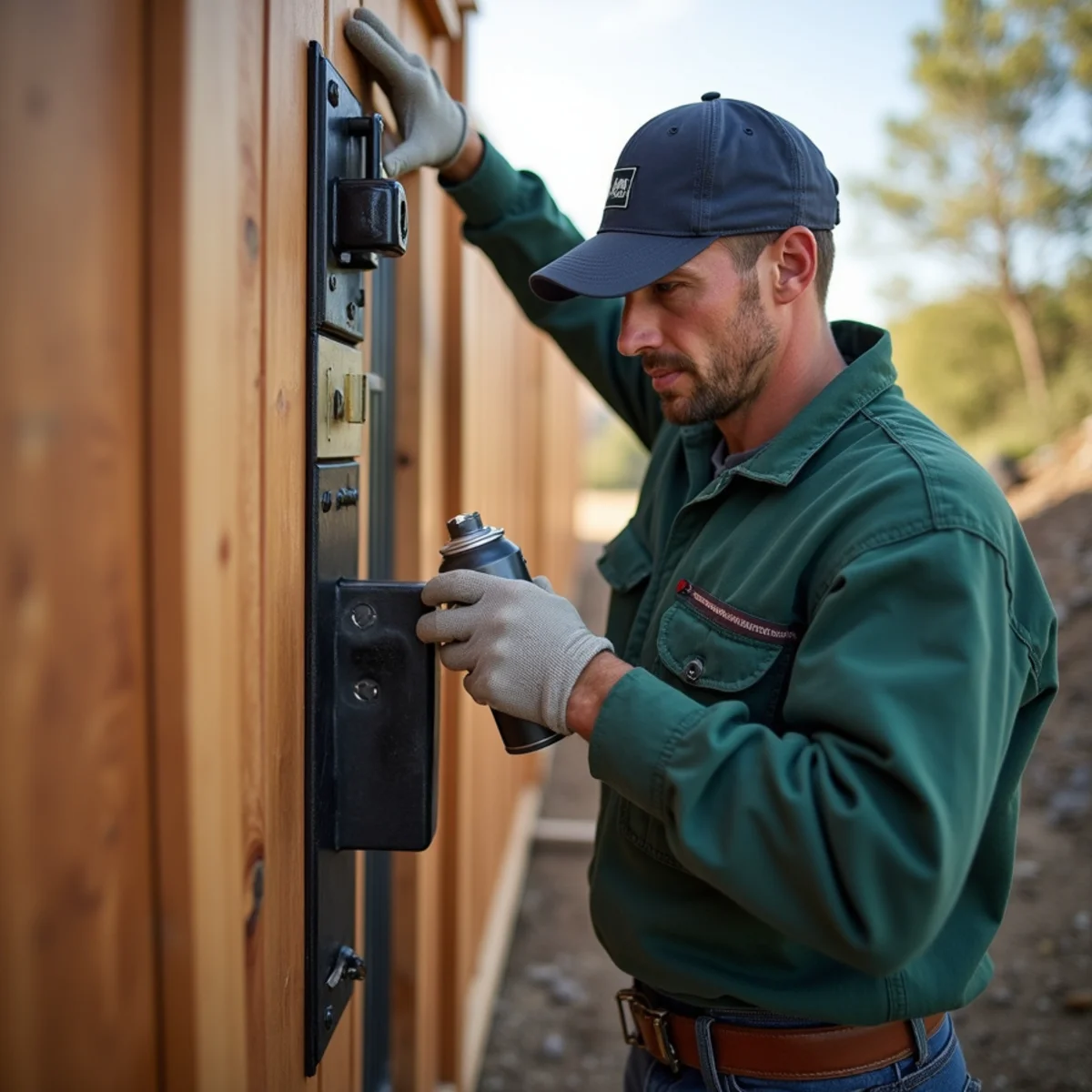
Field Insight on the Lubrication Trap: Why WD-40 Destroys Hinges
Homeowners instinctively reach for WD-40 when a gate hinge squeaks. WD-40 is a solvent and water displacer, not a long-term lubricant. In Colorado Springs, WD-40 strips away factory grease and leaves a sticky residue that attracts windblown granite dust. Within three weeks, that dust turns into an abrasive grinding compound that destroys steel hinge pins.
Guide Outline: Gate Hinge & Latch Maintenance | Colorado Springs, CO
- 1.Front Range Environmental Stress on Heavy Gate Hardware
- 2.Lubrication Chemistry: Why WD-40 Fails and What Heavy Hinges Actually Need
- 3.Through-Bolting vs. Lag Screws: Fastener Torque and End-Grain Pullout
- 4.Seasonal Strike Plate Realignment and Latch Gap Tuning
- 5.Wind-Load Hardware: Drop Rods, Heavy Springs, and Self-Closing Dampers
- 6.Frequently Asked Questions
Front Range Environmental Stress on Heavy Gate Hardware
Residential gates along the Front Range endure unique mechanical and environmental stresses. A standard 6-foot cedar privacy gate weighs between 60 and 90 pounds. Every time the gate swings open, that entire dynamic cantilevered load is concentrated across two or three small steel hinge pins.
In Colorado Springs, three environmental factors accelerate hardware failure: extreme temperature swings (-15°F to 95°F) causing metal thermal expansion, ultra-low atmospheric humidity (regularly below 15%) drying out factory seals, and airborne decomposed granite dust blowing off the foothills.
Without routine servicing, steel pins gall, lag screws back out of soft wood grain, and latches misalign, leaving your yard unsecured and domestic pets vulnerable to escaping.
Questions Regarding gate hinge latch maintenance?
Call Jeremy directly for veteran-owned technical guidance on Front Range fencing.
| Environmental Factor | Direct Mechanical Impact | Symptom on Gate Hardware | Maintenance Solution |
|---|---|---|---|
| Fine Granite Dust & Grit | Acts as grinding compound inside hinge barrel | Loud squeaking; rapid pin wear | Clean with solvent; apply dry graphite spray |
| Chinook Wind Gusts (70+ mph) | Violent slamming against latch stops | Bent hinge leaves; sheared lag screws | Install through-bolts & spring damper |
| Winter Freeze-Thaw Heave | Hinge post shifts 1/2 in out of plumb | Latch tongue misses striker socket | Realign adjustable J-bolt nuts |
| High UV Solar Radiation | Bakes & degrades petroleum lubricants | Gummy residue in latch slide mechanism | Use high-temperature synthetic grease |
Lubrication Chemistry: Why WD-40 Fails and What Heavy Hinges Actually Need
Choosing the right lubricant is the difference between smooth operability and premature hardware destruction. Traditional multi-purpose spray oils (like standard blue-can WD-40) evaporate within 48 hours in arid Colorado air, leaving behind petroleum distillates that attract dirt like a magnet.
For heavy exterior gate hinges, professional contractors use heavy-bodied white lithium grease or synthetic silicone spray. Lithium grease creates a thick, water-resistant lubricating film that cushions steel-on-steel friction and repels moisture during snowstorms.
For tight sliding latch assemblies, keyways, and padlock cylinders, dry graphite spray is the ultimate solution. Micronized graphite powder bonds to metal surfaces without wet oils, allowing latches to slide smoothly without capturing airborne dust particles.
Action Checklist:
- Never use standard WD-40 for long-term gate hinge lubrication
- Apply white lithium grease to heavy hinge barrels using a needle applicator
- Spray dry micronized graphite into latch slide tracks and padlock cylinders
- Wipe away excess lubricant with a rag to prevent dust accumulation
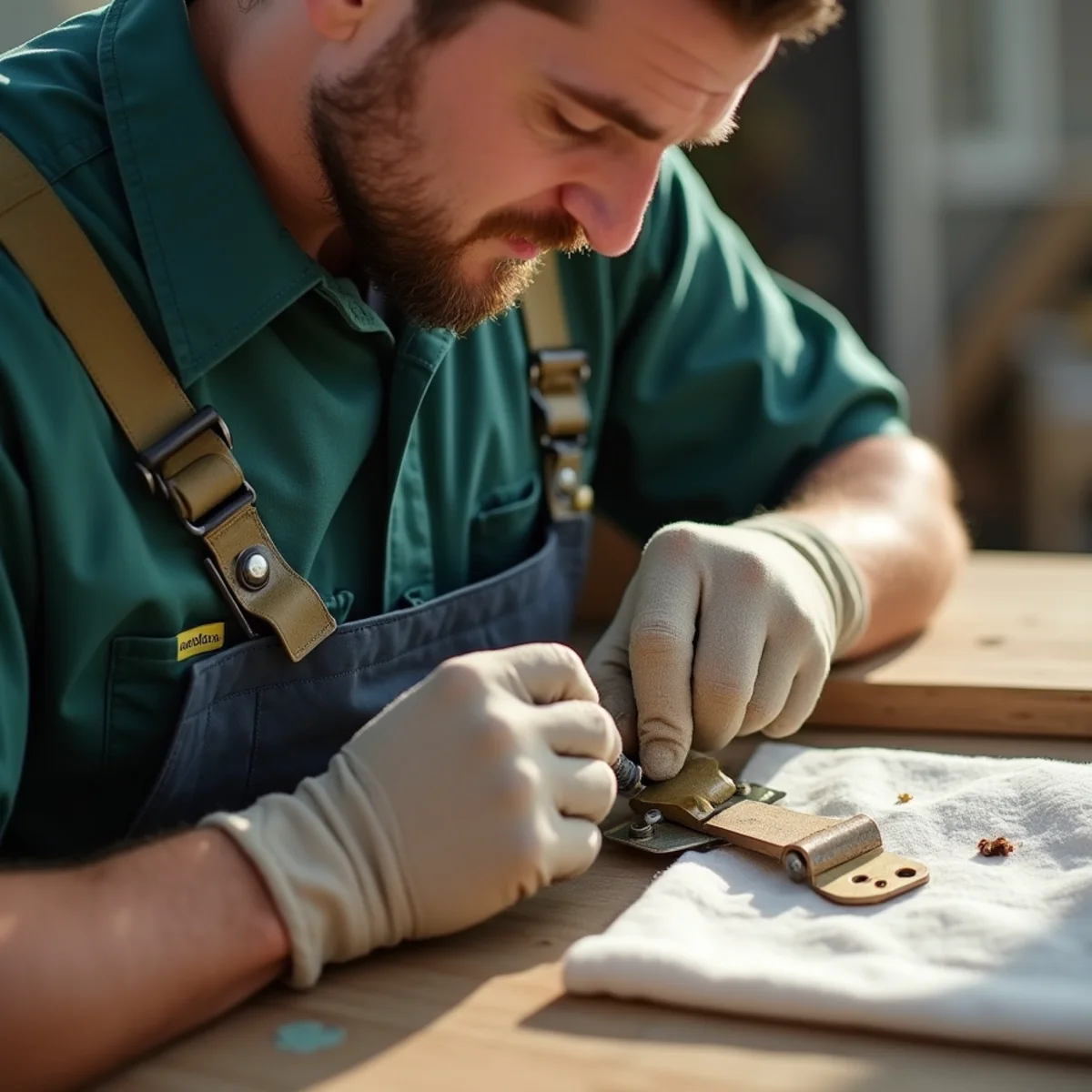
Through-Bolting vs. Lag Screws: Fastener Torque and End-Grain Pullout
Why do gate hinges pull loose from wooden posts? Builder-grade gate installations rely on 1.5-inch to 2-inch lag screws driven directly into the wood. Under the dynamic rotational force of a swinging gate, steel screw threads strip the soft wood fibers, causing the screws to pull out like thumb tacks.
Professional gate construction eliminates lag screws in favor of through-bolting. We bore 3/8-inch clean holes completely through the 4x4 or 6x6 timber post. Heavy carriage bolts or threaded J-bolts pass through the entire timber, secured on the back side with wide fender washers, lock washers, and double hex nuts.
Through-bolting clamps the wood in compression, creating an indestructible mechanical anchor that cannot pull out, even when high Front Range winds slam the gate violently shut.
| Fastener Method | Pullout Resistance | Tolerance to Wind Shock | Longevity on Heavy Cedar Gates |
|---|---|---|---|
| Short Lag Screws (2-in) | Low (strips wood grain) | Fails easily under wind shock | 1 to 2 Years before loosening |
| Structural Timber Screws (4-in) | Moderate (deep thread bite) | Resists moderate gusts | 3 to 5 Years before play develops |
| Carriage Bolts (Through-Post) | High (full wood clamp) | Excellent shock absorption | 15+ Years without loosening |
| Adjustable J-Bolts (Through-Post) | Maximum (structural clamp) | Immune to fastener pullout | Lifetime of the gate |
Seasonal Strike Plate Realignment and Latch Gap Tuning
As Colorado soils freeze in winter and dry out in late summer, fence posts naturally experience micro-movements of 1/4 to 1/2 inch. When the latch post shifts slightly, the latch tongue misses the striker receiver, preventing the gate from locking.
Rather than aggressively shaving wood off your gate frame with a hand planer, adjust the hardware. Most quality commercial latches feature slotted mounting holes that allow 1/2 inch of vertical and horizontal play.
Loosen the mounting screws slightly, slide the striker bracket into perfect alignment with the latch tongue, and retighten. Ensure the latch has a 1/4-inch operational gap between the gate stile and post to accommodate natural humidity expansion during rainy periods.
Action Checklist:
- Loosen striker plate screws and adjust vertically to capture the latch bar
- Maintain a 1/4-inch to 3/8-inch clearance gap between gate frame and strike post
- Ensure gravity latch arm drops completely into the locked cradle position
- Install a safety cable pull through the post for easy exterior access
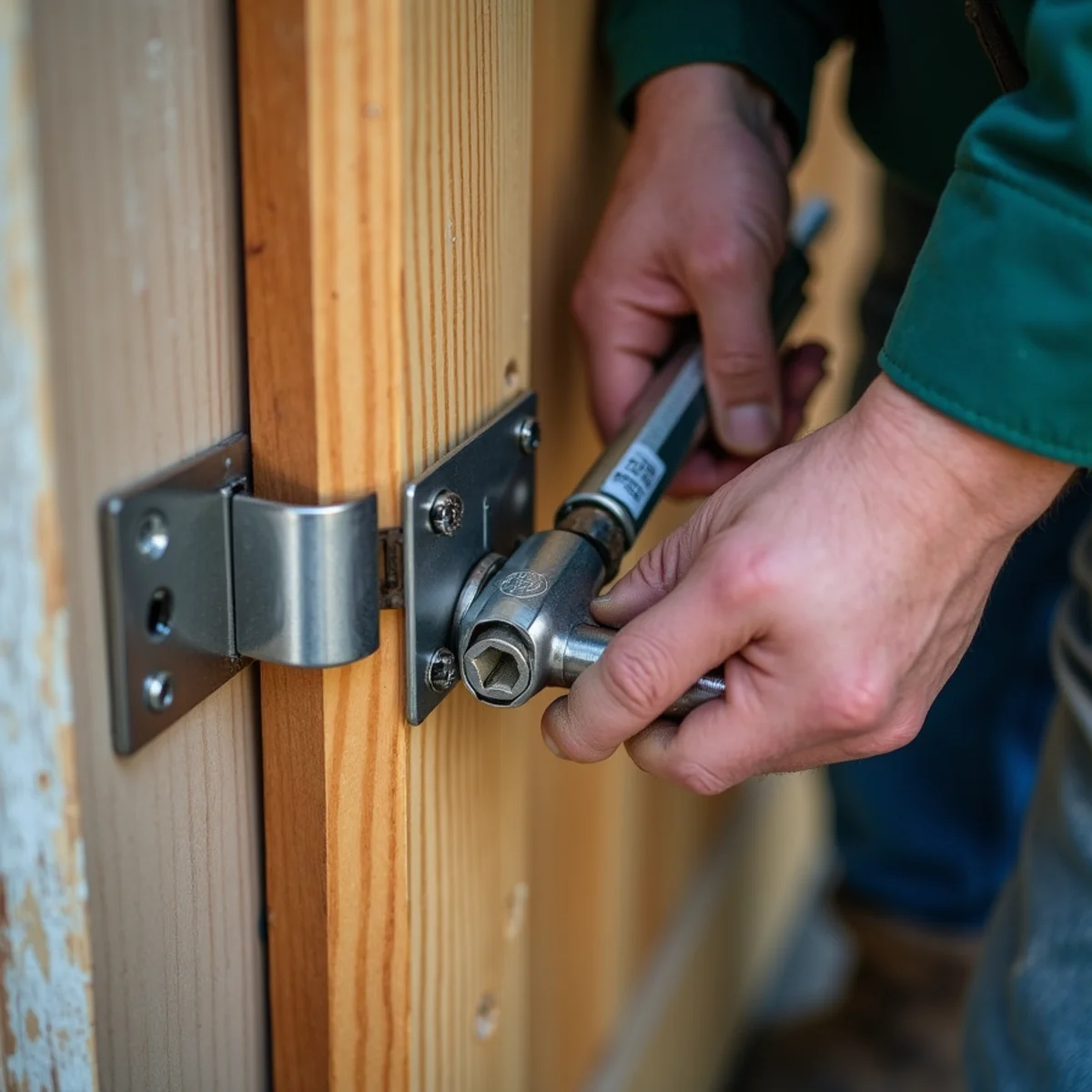
Wind-Load Hardware: Drop Rods, Heavy Springs, and Self-Closing Dampers
Front Range winds can turn a loose gate into a battering ram. To safeguard your investment during severe storms, install specialized wind-load hardware accessories.
For double-drive gates (such as 10-foot or 12-foot RV access gates), a heavy 5/8-inch cane bolt (drop rod) is mandatory. The cane bolt slides downward into a metal pipe sleeve set in concrete, locking the passive gate leaf rigidly in place against lateral wind forces.
For single pedestrian gates, install an adjustable hydraulic or pneumatic gate closer. Closers prevent the gate from being caught by Chinook gusts and slammed against post stops, extending the lifespan of your hinges and latches by years.
Call Jeremy at (614) 543-4232 for dependable hardware overhauls and custom gate fabrication.
| Wind-Control Hardware | Mounted Location | Primary Protection Function |
|---|---|---|
| Heavy Cane Drop Rod (5/8-in) | Bottom rail of passive double gate | Locks gate leaf firmly into concrete socket |
| Adjustable Hydraulic Damper | Top rail between gate and post | Prevents violent wind slamming & uncontrolled swing |
| Tension Gate Spring | Hinge post connecting to frame | Forces gate into positive latching closure |
| Gate Stop Block (2x4 Timber) | Strike post at mid-height | Absorbs latch-side impact shock during wind closure |
Frequently Asked Questions
No. WD-40 is a solvent that strips away factory grease and leaves a sticky residue that attracts airborne granite dust, grinding down steel hinge pins. Use white lithium grease or dry graphite spray instead.