
Hail Hit Your Fence? A Colorado Springs Inspection Checklist
To inspect a Colorado Springs fence after a hailstorm, walk the perimeter with directional sunlight, checking windward pickets for fresh wood fiber bruising, splintering, and shattered vinyl post caps. Chalking stone impact marks and photographing them alongside a ruler provides undeniable proof of physical loss for your insurance adjuster before weather oxidizes the wood.
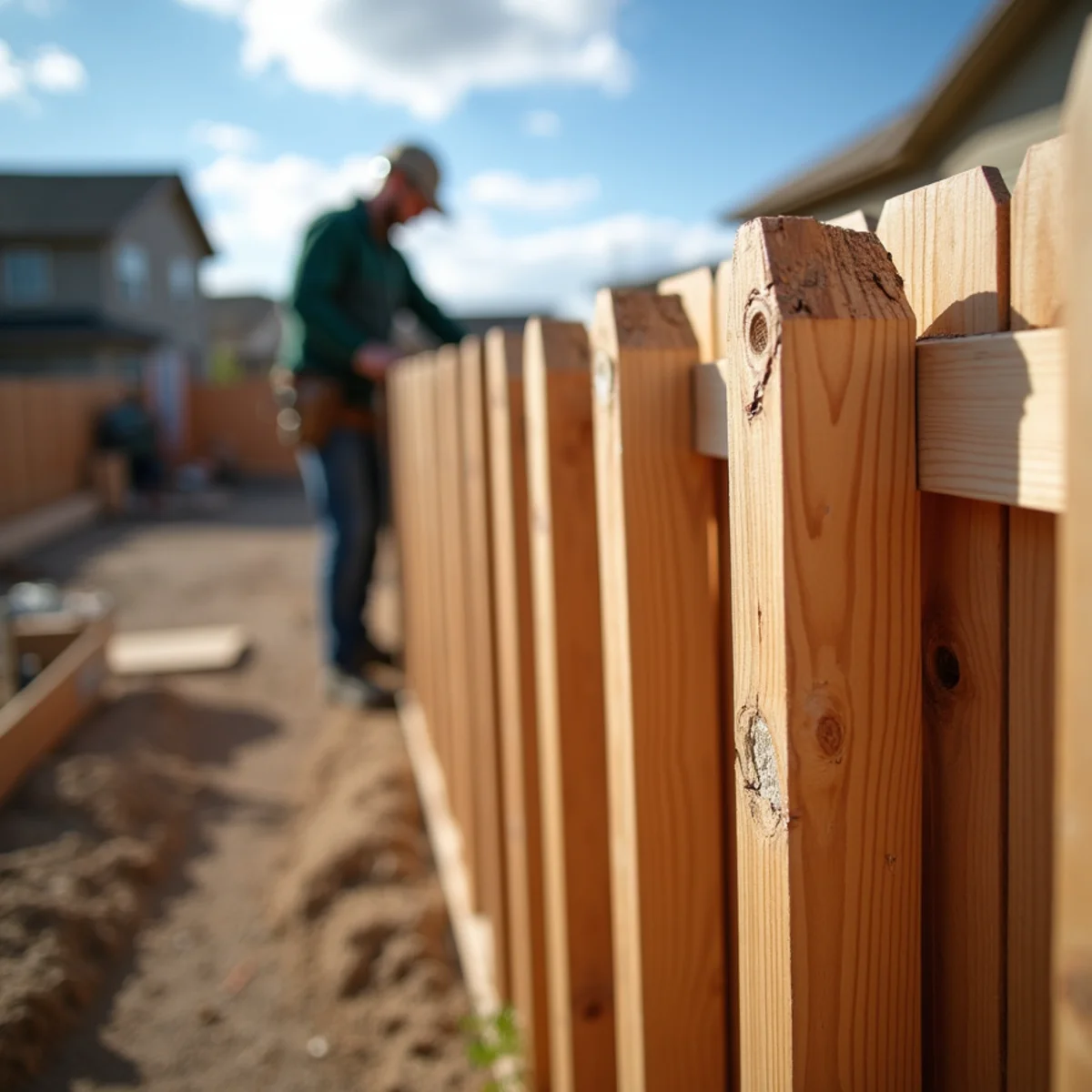
Field Insight on High-Elevation Hailstone Energy Transfer
At 6,200 feet above sea level, hail hits with roughly 20% higher terminal velocity than at coastal elevations due to reduced atmospheric density. A 1.5-inch hailstone driven by 50-mph storm downdrafts carries enough kinetic energy to crush Western Red Cedar cell walls, creating subterranean micro-splinters that allow fungal spores to initiate deep rot within weeks.
Tradeoff Consideration: Power Washing vs. Picket Replacement: Homeowners often try to 'power wash away' hail dents. While pressure washing strips bruised surface fibers to create an even color, it removes valuable protective wood thickness (up to 1/8 inch), accelerating future wind fatigue. Severely pitted pickets should be replaced.
Guide Outline: Hail Hit Your Fence? A Colorado Springs Inspection Checklist
- 1.Assessing Front Range Hail Severity: Impact Velocity and Grain Splitting
- 2.Post-Storm Perimeter Triage: Inspecting Caps, Pickets, and Bottom Rails
- 3.Material-Specific Damage Indicators: Western Red Cedar vs. Extruded Vinyl
- 4.Comprehensive Photographic Documentation for El Paso County Adjusters
- 5.Prioritizing Structural Stabilization Before Sun Bleaching Hides Evidence
- 6.Frequently Asked Questions
Assessing Front Range Hail Severity: Impact Velocity and Grain Splitting
Hailstorms along the Pike's Peak massif develop with violent suddenness. When supercell storms descend from Rampart Range across neighborhoods like Rockrimmon, Briargate, and Stetson Hills, hailstones strike residential fences horizontally rather than vertically due to driving thunderstorm outflow winds.
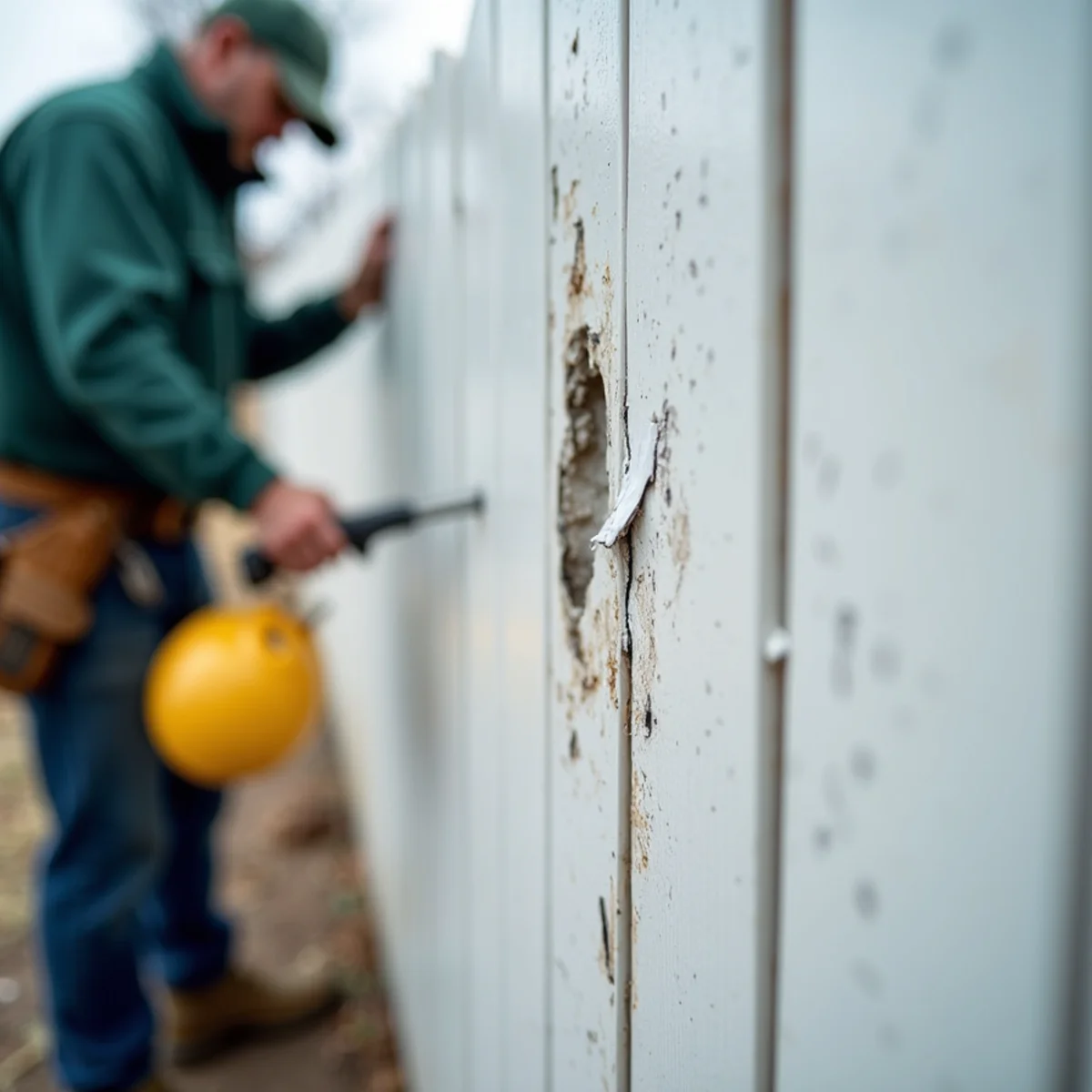
Understanding the physical nature of hail impact is critical for damage identification. On wooden cedar fences, hailstones do not leave round cookie-cutter holes; instead, they crush the softer springwood rings between the harder summerwood grain lines. This produces localized fiber rupture, visible as light-colored gouges or elliptical splinter craters. On vinyl fencing, cold hailstones cause brittle star-shaped fractures and puncture holes through the outer extrusion wall.
Inspect your fence within 48 to 72 hours of the weather event. High-altitude Colorado sunshine oxidizes fresh wood gouges quickly, turning raw bright yellow wood fibers into dull gray wood that insurance adjusters frequently misclassify as 'pre-existing weathering.'
Questions Regarding fence hail damage checklist?
Call Jeremy directly for veteran-owned technical guidance on Front Range fencing.
Action Checklist:
- Inspect within 72 hours before solar UV radiation oxidizes freshly crushed wood
- Identify windward exposure runs (typically west and northwest facing perimeters)
- Use a high-lumen inspection flashlight held parallel to boards to cast shadows in impact craters
- Check metal siding or window screens nearby to corroborate hail strike angles
Post-Storm Perimeter Triage: Inspecting Caps, Pickets, and Bottom Rails
Conducting a systematic perimeter audit ensures no damaged components are missed when building your repair scope. Start your walk at the primary corner post and move clockwise along the exterior boundary.
Begin with the decorative post caps and top rails. Because post caps present a horizontal surface to falling ice, they take the direct brunt of downward hailstone velocity. Check for shattered pyramid caps, cracked copper tops, or split top fascia boards. Next, examine the vertical pickets from top to bottom. In Colorado Springs, pickets frequently suffer bottom-edge splitting where hailstones bounce off concrete mowing strips or rock landscape beds and strike the wood from below.
Finally, inspect horizontal 2x4 framing rails. Hail strikes on top-facing rail edges crush the protective stain barrier, creating pooling basins where rain and melting snow will sit and induce wood rot throughout winter.
| Fence Element | Visual Evidence of Hail Damage | Long-Term Structural Risk |
|---|---|---|
| Post Tops & Caps | Cracked vinyl caps, shattered cedar pyramids | Exposes post end-grain to vertical water saturation and core rot |
| Vertical Pickets | Splintered grain, elliptical impact dents, splits | Weakens board stiffness, promotes warp and cupping under summer heat |
| Horizontal Rails | Top-edge fiber crushing, deep gouges | Traps standing water, causing rail sag and fastener corrosion |
| Vinyl Extrusions | Star-burst spider cracks, punched holes | Allows internal water accumulation, freezing and splitting rails in winter |
Material-Specific Damage Indicators: Western Red Cedar vs. Extruded Vinyl
Different fencing materials react to hail impact in fundamentally distinct ways, requiring specialized diagnostic techniques during an insurance inspection.
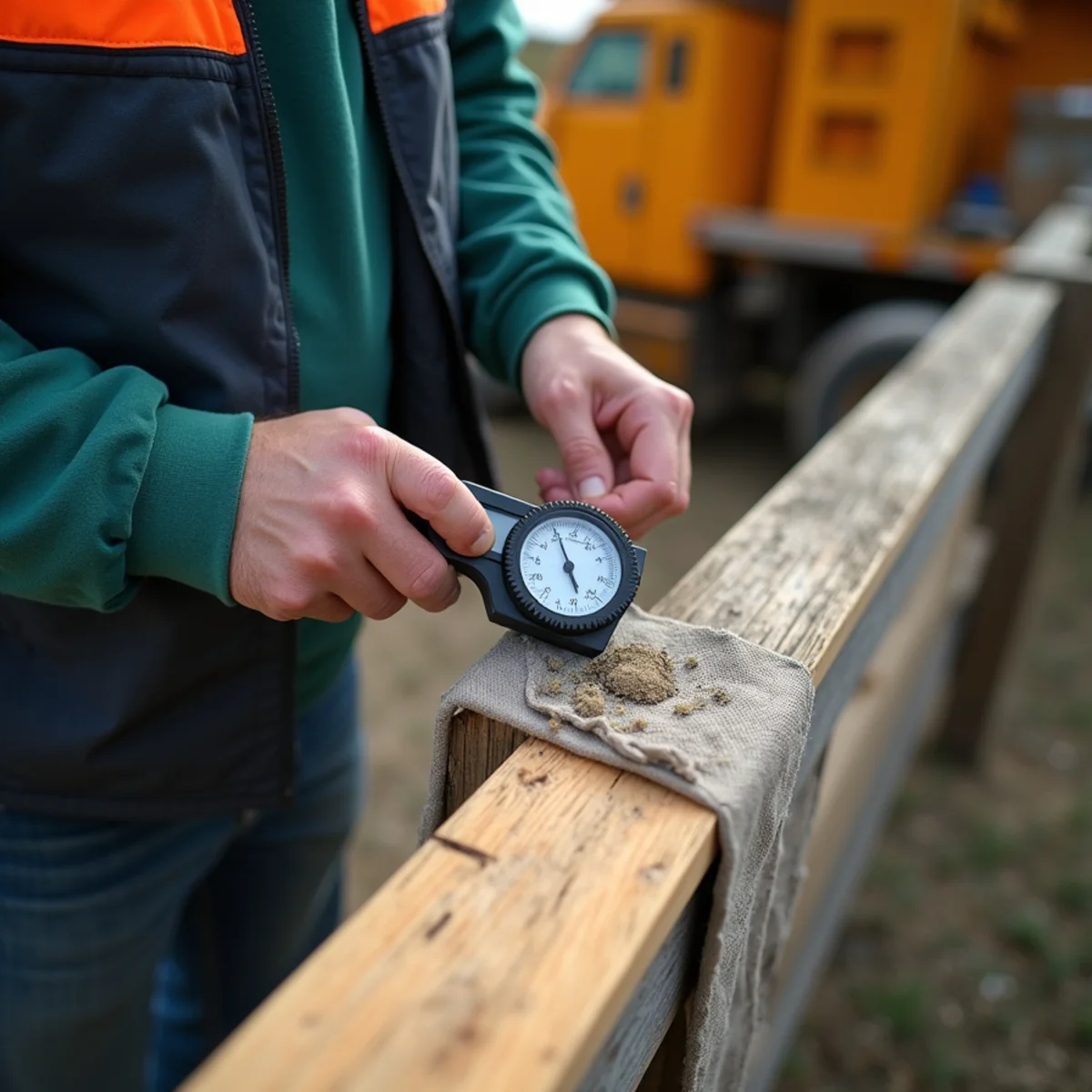
Western Red Cedar is an exceptional fencing lumber, but its open-cellular structure makes it susceptible to impact bruising. Look for 'shiners'—areas where the natural cedar oils and tannins were pulverized on impact, leaving pale spots surrounded by crushed wood fibers. If the hail was larger than 1.5 inches, examine the back side of the pickets: significant impact forces will cause vertical cleavage fractures along the growth rings that run completely through the 5/8-inch board.
Vinyl fences present a different failure mode. Quality virgin vinyl contains impact modifiers and UV inhibitors, but under cold storm conditions (sub-50°F temperatures during summer hail squalls), vinyl loses elasticity. Look for concentric circular cracks, chipped rail pockets, and internal shatter around routed post holes.
Action Checklist:
- Cedar: Check for through-board vertical splits along grain lines
- Cedar: Rub hands over pickets to feel for crushed, detached wood splinters
- Vinyl: Inspect around routed post openings where stress concentrates
- Vinyl: Tap panels lightly with a rubber mallet to reveal hidden spider fractures
Comprehensive Photographic Documentation for El Paso County Adjusters
Insurance claim approvals hinge entirely on the clarity and precision of your photographic documentation. Adjusters handle hundreds of roof and siding claims following a Colorado Springs hail event, and fence damage is frequently minimized or overlooked unless undeniable photographic evidence is presented.
To build an airtight insurance file, follow a three-tier photo strategy. First, take macro close-up shots of individual hail strikes with a coin, ruler, or official hail gauge placed directly adjacent to the damage to establish scale. Second, take medium-range photos showing the density of strikes across each 8-foot panel (e.g., counting 15 to 30 significant hits per board). Third, capture wide-angle context shots displaying the entire fence run with the homeowner's house in the background to confirm the property location.
Rubbing carpenter's blue sidewalk chalk gently over bruised pickets will highlight the depth of wood crushing without permanently staining the fence, making dent depth stand out crisply in adjuster reports.
| Photo Level | Camera Perspective | Adjuster Objective |
|---|---|---|
| Macro Detail | 3–6 inches away with scale ruler and chalk | Proves stone diameter exceeded policy impact thresholds |
| Panel Density | 4–6 feet back showing full 8-ft span | Demonstrates widespread loss of protective finish and grain integrity |
| Elevation Context | 15–20 feet back showing house and fence | Eliminates location disputes and verifies storm trajectory |
| Collateral Proof | Close-ups of dented gutters, grills, or AC fins | Corroborates storm severity on same parcel |
Prioritizing Structural Stabilization Before Sun Bleaching Hides Evidence
Timing is essential when dealing with hail insurance claims in Colorado. Most insurance policies require property owners to report hail losses within 365 days of the date of occurrence, but waiting more than 30 days puts your claim at severe risk.
As UV rays bleach raw wood and dirt fills vinyl fractures, adjusters may argue the damage is ordinary weathering or cosmetic wear-and-tear. Furthermore, broken post caps and shattered pickets leave interior wood exposed to Front Range rains, initiating mold and wood decay that complicates the claim.
Contact Jeremy's Fences immediately following a storm. We provide comprehensive on-site hail damage assessments, furnish itemized repair or replacement estimates using standardized insurance line items, and meet with adjusters on-site to advocate for complete perimeter restoration.
Action Checklist:
- Schedule contractor inspection within 14 days of the storm
- Record official date of loss and National Weather Service storm report
- Obtain full itemized replacement cost estimate detailing linear footage and post depth
- Seal or replace broken post caps immediately to prevent internal post rot
Frequently Asked Questions
Yes. Most Colorado homeowners policies cover hail damage under Coverage B (Other Structures). If hail has splintered pickets, fractured vinyl rails, or destroyed post caps, insurance typically pays replacement cost minus your deductible.