
Best Deck Stain for Colorado's High-Altitude Sun | DIY Guide
The best deck stains for Colorado's high-altitude sun are deep-penetrating oil-based formulas with trans-oxide pigments—such as TWP 1500 Series, Armstrong Clark, or Ready Seal. Avoid film-forming acrylic latex stains, which crack and peel under intense UV radiation and extreme Front Range temperature swings.
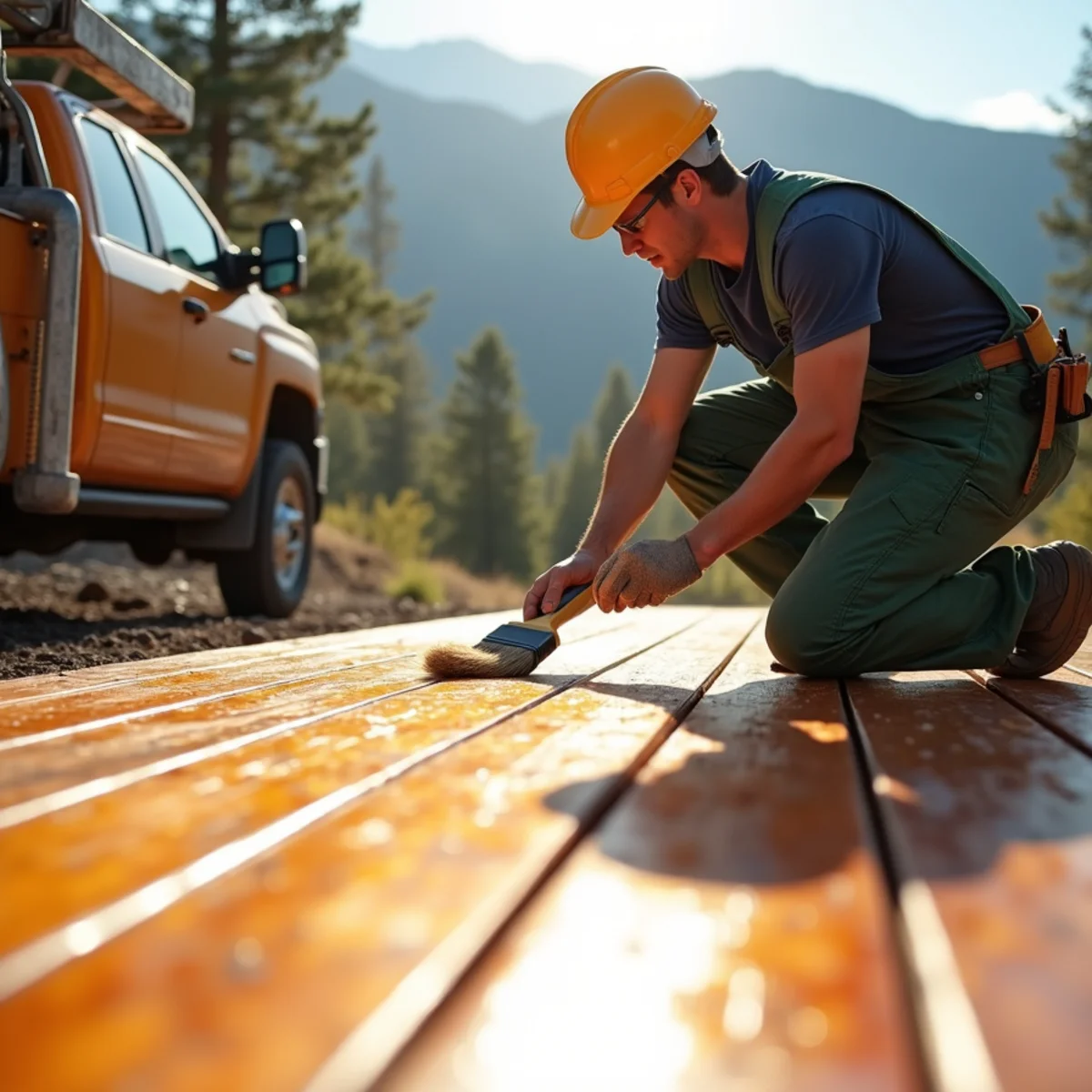
Field Insight on Pigment Load as Sunscreen for Wood
Clear 'natural' sealers provide zero UV protection in Colorado Springs. Ultraviolet rays pass directly through clear finishes, destroying wood lignin within six months. Pigment in stain acts exactly like mineral zinc oxide in sunscreen: finely milled synthetic iron oxide pigments absorb and scatter destructive UV rays before they can reach wood cells.
Guide Outline: Best Deck Stain for Colorado's High-Altitude Sun | DIY Guide
- 1.High-Elevation Solar Intensity: The Physics of Lignin Degradation
- 2.Formulation Comparison: Penetrating Natural Oils vs. Acrylic Film Formers
- 3.Pigment Load as Sunscreen: Clear vs. Semi-Transparent vs. Semi-Solid
- 4.Reviewing Top-Tier Professional Stains: TWP, Armstrong Clark, and Ready Seal
- 5.Application Mastery: Moisture Testing, Ambient Temps, and Back-Brushing
- 6.Frequently Asked Questions
High-Elevation Solar Intensity: The Physics of Lignin Degradation
Colorado Springs decks sit above 6,000 feet elevation, where the earth's protective atmospheric blanket is thinner. For every 1,000 feet of altitude, ultraviolet radiation increases by 4% to 5%. In addition, Colorado Springs receives over 300 sunny days per year with low atmospheric humidity.
Under this relentless solar bombardment, unprotected wood surfaces reach temperatures exceeding 140°F on July afternoons. Ultraviolet rays break down lignin—the organic polymer that cements cellulose wood fibers together.
Once lignin is destroyed by photodegradation, the surface wood fibers turn into dead gray cellulose dust. When rain or snowmelt lands on degraded wood, it washes away loose fibers, creating deep fissures, grain checking, and board cupping.
Questions Regarding best deck stain colorado sun?
Call Jeremy directly for veteran-owned technical guidance on Front Range fencing.
| Elevation Factor | UV Intensity Increase | Effect on Deck Boards | Required Protective Mechanism |
|---|---|---|---|
| Sea Level Baseline | 0% (Baseline) | Moderate annual weathering | Standard water sealers acceptable |
| Denver (5,280 ft) | +22% UV Intensity | Accelerated surface drying | Semi-transparent oil stain |
| Colorado Springs (6,035 ft) | +26% UV Intensity | Rapid lignin photodegradation | Heavy trans-oxide pigment load |
| Woodland Park (8,465 ft) | +38% UV Intensity | Extreme cellular breakdown & checking | High-solids non-drying conditioning oils |
Formulation Comparison: Penetrating Natural Oils vs. Acrylic Film Formers
When shopping for deck stains at retail home centers, products fall into two radically different chemical categories: penetrating oil stains and film-forming acrylic stains.
Film-forming stains (including solid color stains and acrylic sealers) sit on top of the wood surface like a sheet of latex paint. Because Colorado air is extremely dry and temperatures fluctuate wildly, deck boards constantly expand and contract. The acrylic film cannot flex at the same rate as the lumber, causing the coating to blister, crack, and peel into unsightly ribbons within two seasons.
Penetrating oil stains (formulated with paraffin, linseed, or tung oils) do not form a surface film. Instead, they soak deep into the porous cellular structure of the wood, replenishing natural resins and repelling water from within. When re-coating time arrives, no scraping or chemical stripping is required—simply wash the deck and apply another coat.
Action Checklist:
- Choose non-film-forming penetrating oil stains that condition wood internally
- Never apply solid acrylic paint or polyurethane clear coats to exterior deck floors
- Look for stains containing drying and non-drying conditioning oils
- Verify the formulation complies with Colorado VOC (Volatile Organic Compound) limits
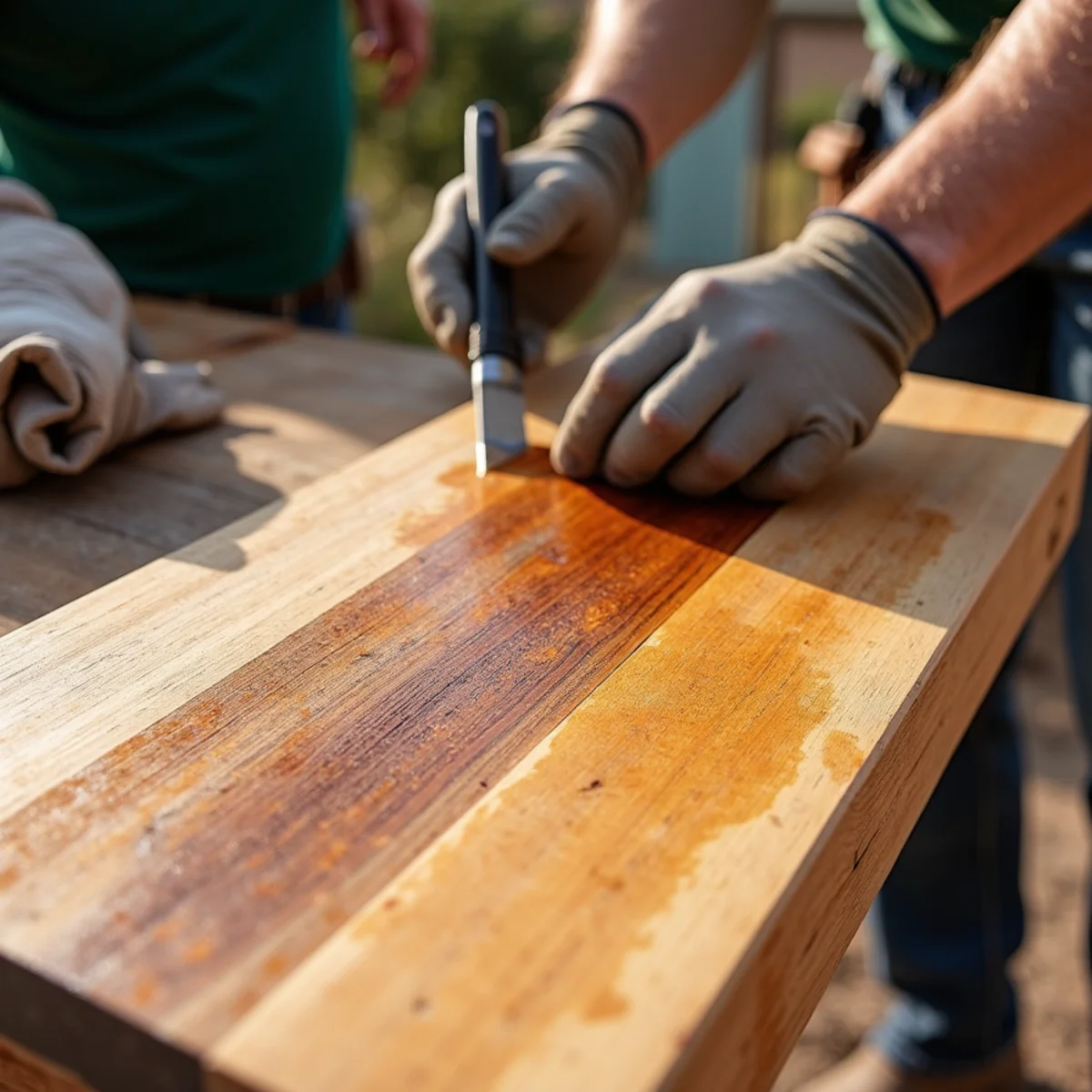
Pigment Load as Sunscreen: Clear vs. Semi-Transparent vs. Semi-Solid
Homeowners often desire a 'completely clear' finish to highlight the natural golden glow of new cedar or redwood. In Colorado Springs, this is a major mistake.
Clear wood sealers contain almost no pigment. They allow 100% of solar UV radiation to pass straight through to the wood, leading to silvering and grain checking within six months. To achieve meaningful longevity in high-altitude sun, stain must contain pigment.
Semi-transparent stains contain finely ground trans-oxide pigments that tint the wood while allowing natural grain patterns to show through clearly. The trans-oxide particles reflect UV wavelengths, providing 2 to 3 years of durability on sunny horizontal deck boards. Semi-solid stains provide even higher pigment loads, extending service life to 3 to 4 years.
| Stain Opacity Level | Pigment Density | UV Resistance in CO Sun | Expected Deck Lifespan | Appearance on Cedar |
|---|---|---|---|---|
| Clear / Natural Sealer | 0% to 5% (Negligible) | Extremely Poor (UV penetrates) | 6 to 9 Months | Completely natural grain |
| Translucent Tone | 10% to 20% Light | Low to Moderate | 1 to 2 Years | Subtle warm enhancement |
| Semi-Transparent | 30% to 50% Balanced | Excellent (Trans-oxide shield) | 2 to 3 Years | Highlights grain; rich color |
| Semi-Solid Tone | 60% to 80% Dense | Maximum UV protection | 3 to 4 Years | Mutes heavy grain; uniform tone |
Reviewing Top-Tier Professional Stains: TWP, Armstrong Clark, and Ready Seal
Based on years of field experience restoring decks across El Paso County, we recommend three professional-grade penetrating oil stains that consistently outperform big-box brands.
First, TWP 1500 Series (Total Wood Preservative) is an exceptional EPA-registered wood preservative. It features unique trans-oxide pigments and paraffin oils that penetrate deeply and resist mold, mildew, and UV fading without peeling. Second, Armstrong Clark features a dual-action formula: non-drying vegetable oils soak deep into the wood to condition fibers, while drying oils cure on the surface to lock in pigments.
Third, Ready Seal is an idiot-proof semi-transparent oil that requires no back-brushing, blends seamlessly without lap marks, and never peels or blisters under extreme Front Range temperature swings.
Action Checklist:
- TWP 1500 Series: Best overall UV protection and mildew resistance for Front Range sun
- Armstrong Clark: Best for conditioning older, dried-out cedar and redwood decks
- Ready Seal: Best user-friendly application; zero lap marks or runs
- Avoid retail 'deck makeover' thick coatings that trap moisture and rot wood
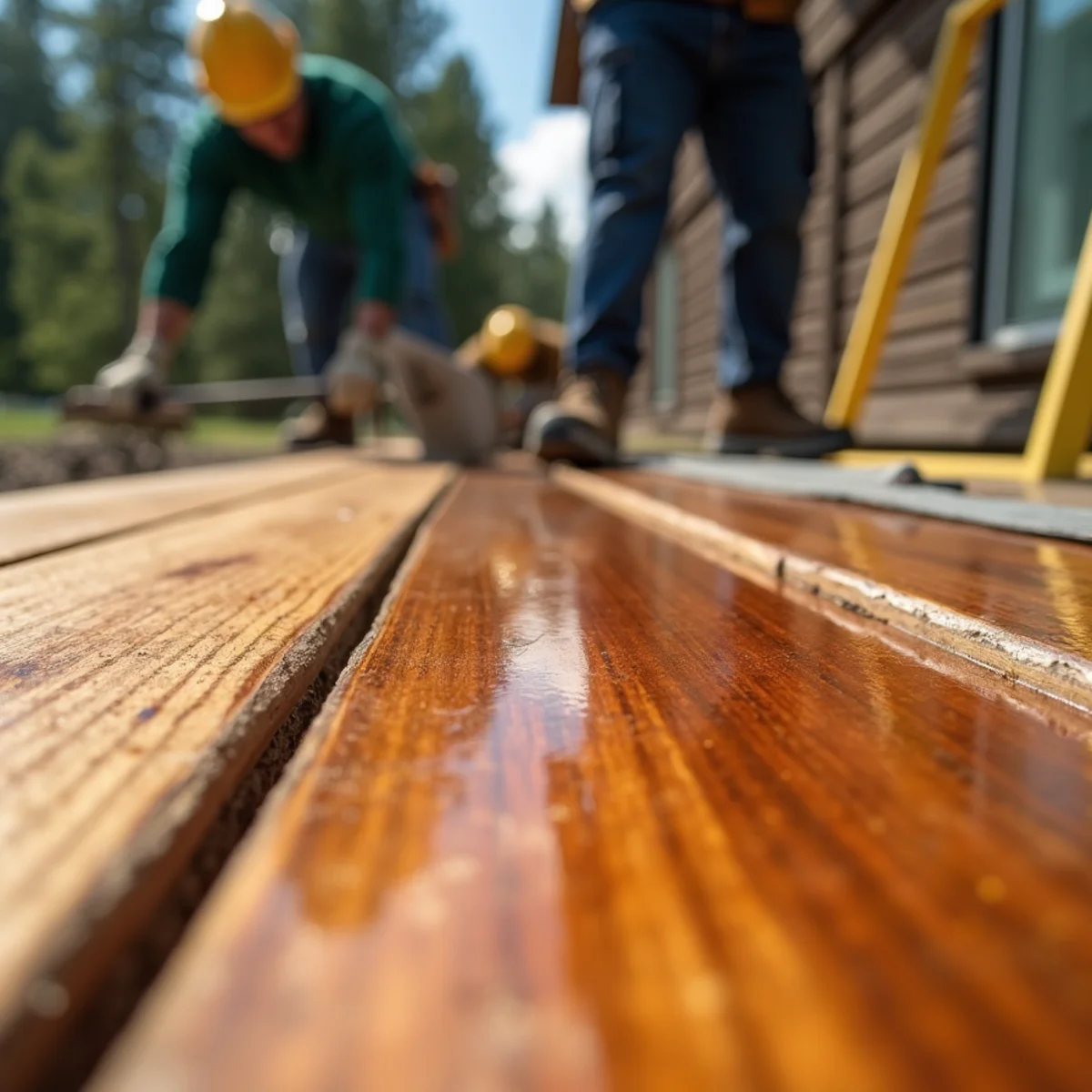
Application Mastery: Moisture Testing, Ambient Temps, and Back-Brushing
Even the finest penetrating oil will fail if applied under improper conditions. Achieving a professional finish requires strict adherence to environmental parameters.
Never apply stain to damp wood. Wash the deck thoroughly with an oxygenated cleaner, and use a digital moisture meter to verify internal wood moisture is under 12% to 15% before staining (requiring at least 48 to 72 hours of warm sunshine after washing).
Apply stain when ambient temperatures are between 50°F and 85°F, avoiding direct midday baking sun which causes oils to flash-dry before soaking in. Always back-brush: whether applying stain by roller or garden pump sprayer, immediately brush the wet oil into the grain with a wide stain brush to force the oils into the wood capillaries.
Call Jeremy at (614) 543-4232 for professional deck restoration, pressure washing, and staining.
| Application Parameter | Optimal Specification | Risk of Non-Compliance |
|---|---|---|
| Wood Moisture Level | Below 12% to 15% moisture | Trapped water rejects oil; causes blotchy finish |
| Ambient Air Temperature | 55°F to 80°F | Cold prevents oil penetration; heat causes flash-drying |
| Solar Angle / Direct Sun | Apply in morning or shaded hours | Hot direct sun bakes stain before it penetrates |
| Application Method | Sprayer / Pad with Back-Brush | Spraying only leaves puddles and uneven saturation |
Frequently Asked Questions
Deck stain peels because homeowners use film-forming acrylic or latex products. High-altitude UV radiation and drastic temperature swings cause deck boards to move, cracking the brittle surface film and causing it to peel in sheets.